"My Oura Ring HRV went from 42 to 61 in two weeks. I put these on every night at 8 and honestly the sleep data speaks for itself. Skeptical going in — converted now."
Marcus T.
Oura Ring user
Blue light blocking glasses engineered for biohackers. Protect your circadian rhythm. Fall asleep faster. Wake up with higher HRV.
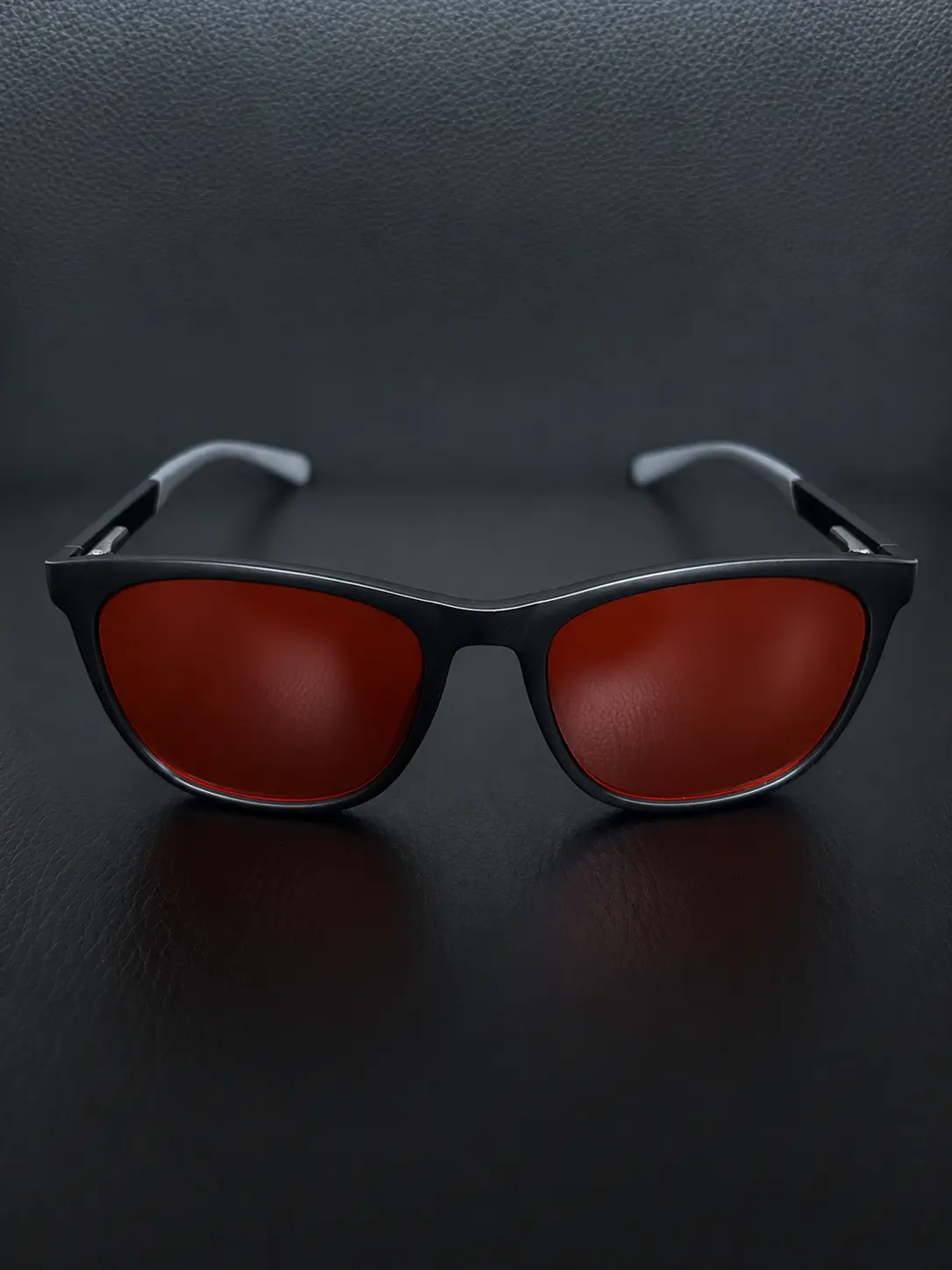
Lightweight frames. Precision lenses. Designed to be worn, not just bought.
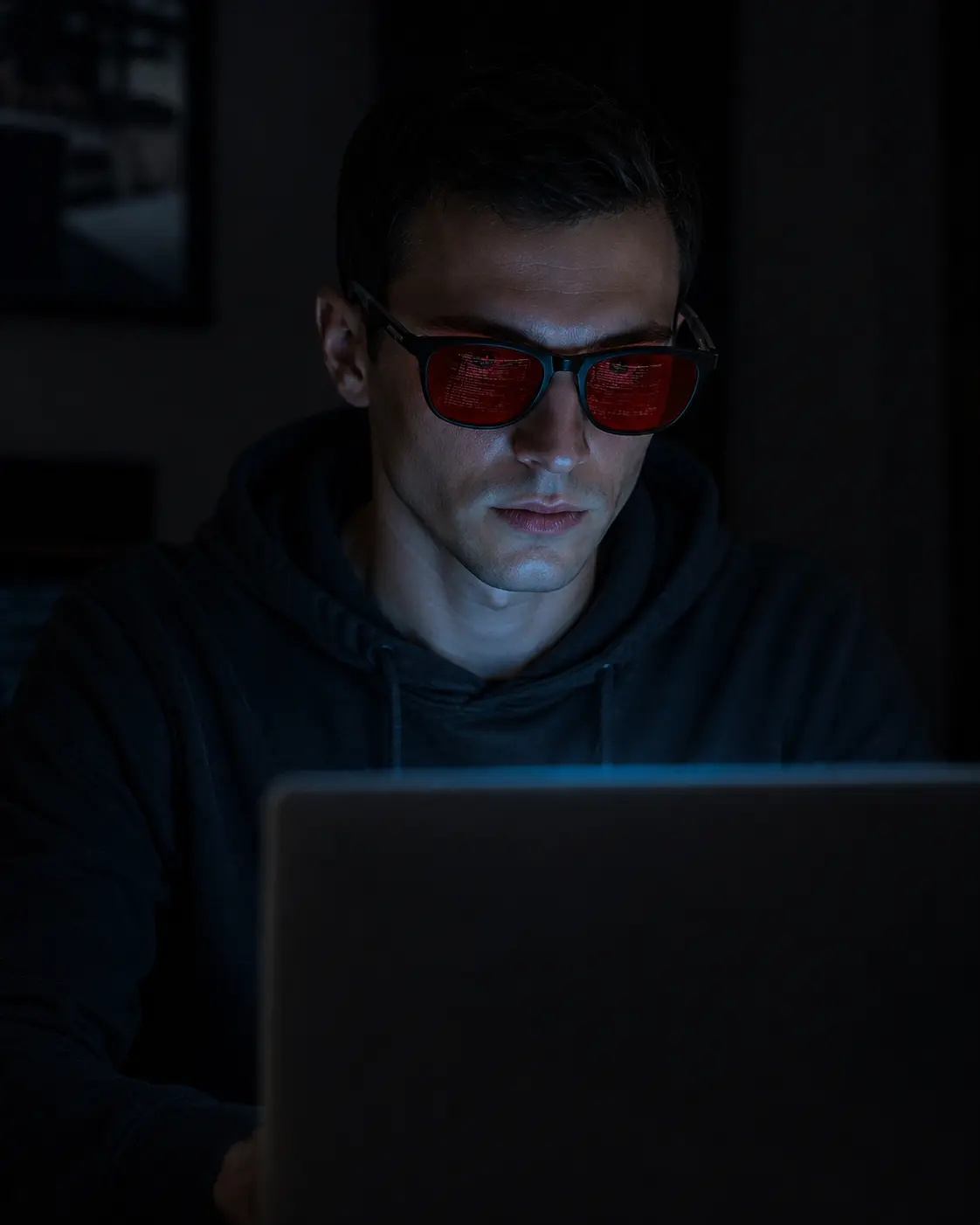
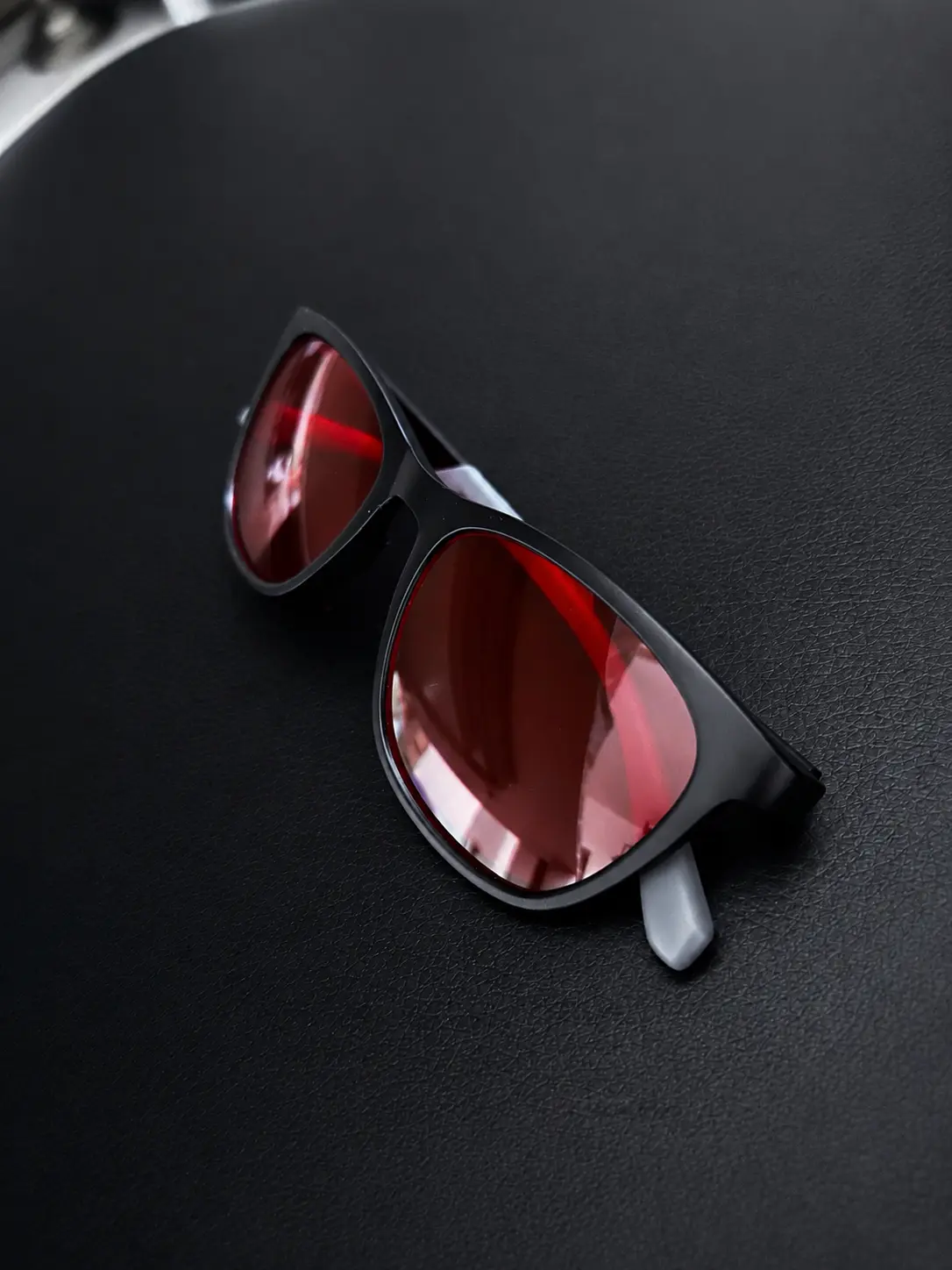
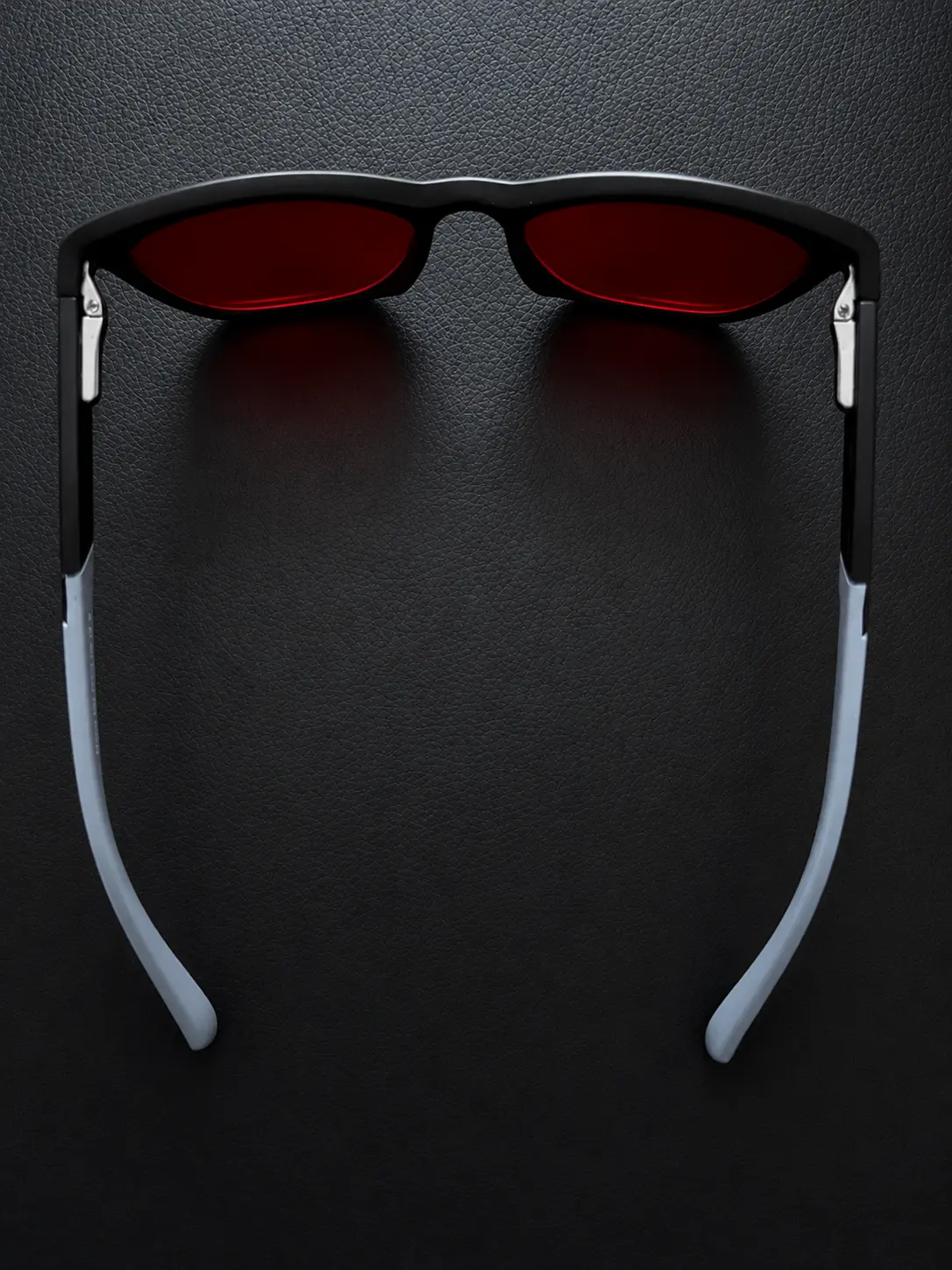
Modern screens emit concentrated blue light at the exact wavelength that suppresses melatonin — the hormone that governs your sleep, recovery, and longevity.
Evening blue light triggers a cortisol response, keeping your nervous system in an alert state when it should be winding down.
Blue light delays melatonin onset by up to 3 hours — meaning you're biologically unable to reach deep sleep on schedule.
Poor melatonin signaling disrupts autonomic recovery. Your wearable shows it: lower HRV, less restorative deep sleep, elevated resting heart rate.
Targeted filtration at the wavelengths that matter. Measurable results you can track.
Block the 430–450nm spectrum that suppresses melatonin. Restore natural sleep onset and maximize time in restorative deep sleep stages.
Reduce eye strain-induced cortisol during late work sessions. Maintain cognitive performance without sacrificing the sleep you need to consolidate it.
99.9% blue light filtration in the 430–450nm range with 30% visible light transmission — screen content stays clear, harmful wavelengths don't.
No complicated routines. One habit, measurable results.
Or 2+ hours before your target sleep time. Pair with your existing wind-down protocol — reading, journaling, light stretching.
The red lenses intercept the specific wavelengths that activate melanopsin retinal ganglion cells — the light sensors that control your biological clock.
With the blue light signal removed, your pineal gland releases melatonin at the biologically correct time. Track the difference on your wearable.
Real data from real users who track their sleep.
"My Oura Ring HRV went from 42 to 61 in two weeks. I put these on every night at 8 and honestly the sleep data speaks for itself. Skeptical going in — converted now."
"I run a startup and work late most nights. Since Lumiq I'm falling asleep 45 minutes faster and actually feel rested. The quality is way above what I expected at this price."
"Two kids under 5 so I'm glued to my phone after bedtime. These have genuinely changed my sleep. I track with WHOOP and my recovery scores are consistently higher week over week."
"I lift 5 days a week and sleep is everything for recovery. Ordered these as part of a sleep stack overhaul. Sleep quality jumped, especially deep sleep duration. Worth it."
"Thought this was pseudoscience until a friend showed me the actual melanopsin research. Bought them as an experiment with my Garmin tracking. 3 weeks in — body battery consistently higher. Data doesn't lie."
Your retina contains a special class of photosensitive cells called intrinsically photosensitive retinal ganglion cells (ipRGCs). These cells contain melanopsin, a photopigment with peak sensitivity around 480nm — directly in the blue light spectrum. When activated by blue light exposure in the evening, they signal your suprachiasmatic nucleus (your biological clock) to suppress melatonin production. This is not a wellness claim — it's basic photobiology.
Berson et al. (2002) — Science, PubMedResearch from Charles Czeisler's lab at Harvard Medical School demonstrated that evening light exposure — particularly in the blue spectrum — can delay the circadian clock by up to 3 hours. In controlled conditions, subjects exposed to blue-enriched light before sleep showed significantly delayed melatonin onset, reduced alertness the following morning, and disrupted cortisol rhythms. Filtering this light in the critical evening window is a direct countermeasure.
Lockley, Brainard & Czeisler (2003) — J Clin Endocrinol Metab, PubMedHeart rate variability (HRV) is regulated in part by the autonomic nervous system's parasympathetic branch — the "rest and digest" state. Melatonin plays a direct role in downregulating sympathetic activity at night. When melatonin is suppressed by blue light, sympathetic tone remains elevated, HRV stays depressed, and cardiovascular recovery is compromised. For biohackers tracking HRV, this is the mechanism behind why screen time before bed shows up in your data.
Arendt & Skene (2005) — Sleep Medicine Reviews, PubMedThe honest answers.
Yes — the mechanism is well-established. Blue light in the 430–480nm range suppresses melatonin production by activating melanopsin receptors in retinal ganglion cells. Blocking this spectrum 2–3 hours before bed allows melatonin to rise on schedule. A 2021 meta-analysis in Frontiers in Neurology found blue light blocking glasses significantly improved sleep onset and quality. Track your sleep score on a wearable before and after — most users see measurable improvement within 7 days.
Blue light from screens suppresses melatonin by up to 3 hours when viewed in the evening (Harvard Medical School, Czeisler lab). Lumiq's red lenses filter 99.9% of the 430–450nm spectrum, removing the primary signal that tells your brain it's still daytime. With that signal gone, your pineal gland produces melatonin on schedule, sleep onset accelerates, and deep sleep stages lengthen. Biohackers tracking with Oura or WHOOP typically see HRV improvement within 2 weeks.
Wear them 2–3 hours before your target sleep time — typically from 8–9 PM onward, or after sunset. Daytime blue light exposure is actually beneficial: it anchors your circadian rhythm and promotes alertness. Lumiq is an evening protocol tool, not an all-day accessory.
Deep red lenses provide the highest blue light filtration — 99%+ blocking in the 430–480nm range. Clear or lightly tinted lenses marketed as "blue light blocking" typically only filter 20–40%. For sleep optimization, deep red lenses are the evidence-based choice. Lumiq uses pure red lenses: blue tones go nearly black and there is a strong red cast overall. Text stays fully readable; colours do not — that's the filter working as intended.
Inexpensive blue light glasses use a cosmetic tint that reflects some visible blue light but does not target the melatonin-critical 430–450nm band with precision. Lumiq uses optical-grade lenses verified to 99.9% filtration at the specific wavelengths that activate melanopsin receptors — the biological mechanism behind sleep disruption. The difference is between a fashion accessory and a functional sleep tool.
Text, layout, and content stay fully readable — no blurriness. But colors shift significantly: blue tones go nearly black, everything takes on a strong red cast. Think of it as a deep red filter over your screen. It looks dramatic at first. Most users adjust within a few sessions and find it fine for reading, browsing, and casual work. It's not suitable for color-accurate tasks like photo or video editing.
Yes — Lumiq lenses are optical-grade and safe for daily evening use. The color shift is significant while wearing: blue tones go nearly black and everything has a strong red cast. This resolves completely the moment you take them off. No lasting eye strain, no UV concern.
Not happy within 30 days? Email us at contact@longevitylabs.shop and we'll make it right. No forms, no hoops.
Not happy with Lumiq in the first 30 days? Email us at contact@longevitylabs.shop and we'll make it right. No forms, no hoops.